Holy Week 2026
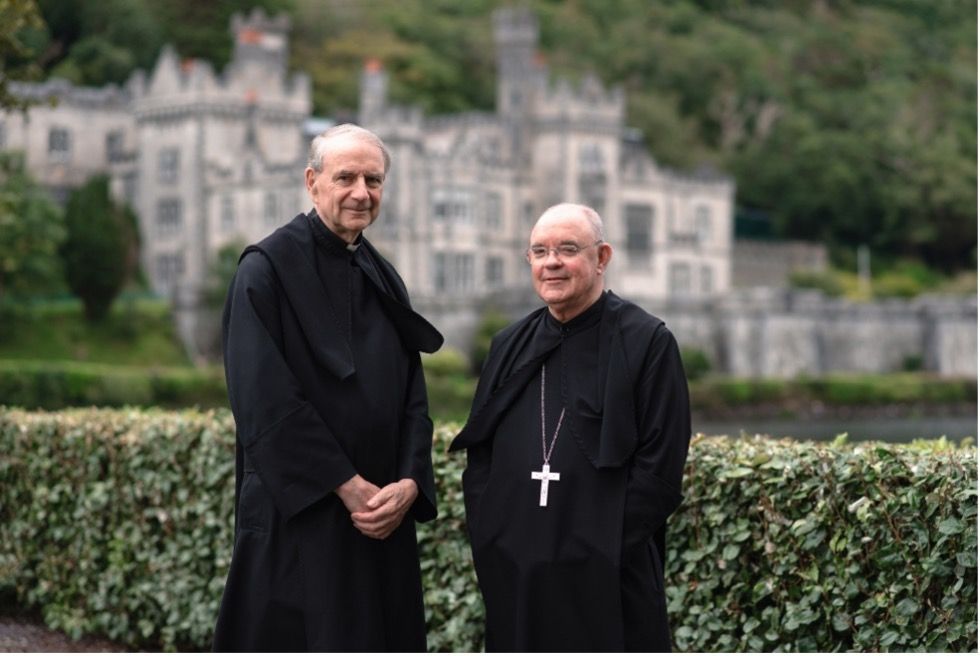
Palm Sunday Homily by Abbot Brendan
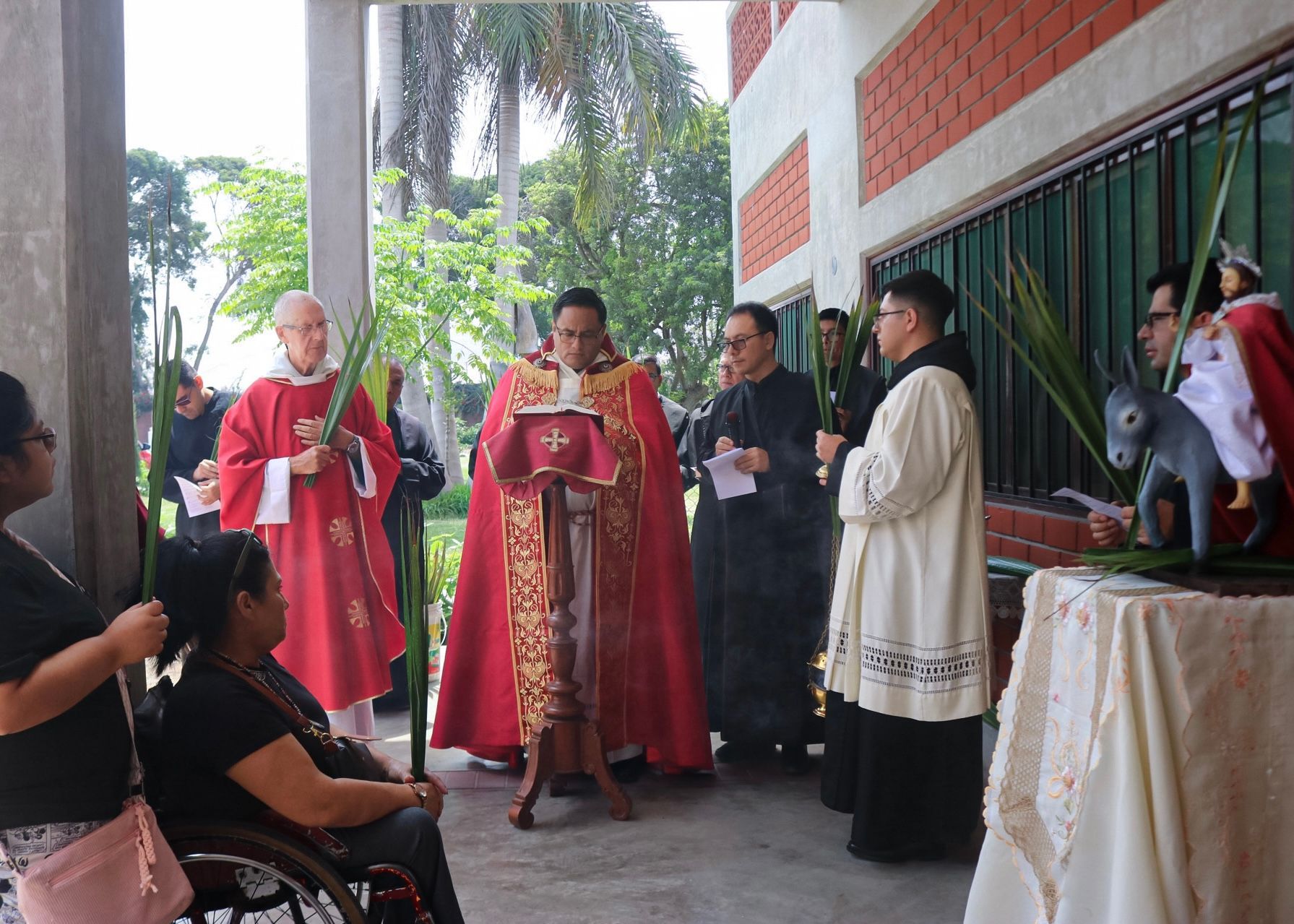
Watch the Brethren in Peru celebrate Palm Sunday 2026
In this Holy Week, we are not simply remembering past events.
We are being drawn into them. We are invited to take our place within the sad and mysterious drama that leads to the shameful—and life-giving—death of the Lord.
It is a journey of astonishing contrasts. A moment ago, we sang our Hosannas, welcoming Christ as king. And yet, in the Passion we have just proclaimed, we have been with the crowd who shouts: “Crucify him.”
We walk with him into Jerusalem in triumph and within days we stand among those who reject him. The same city, the same people, the same hearts—so quickly turned.
And this is why this story has changed the world.
Because it is not only his story. It is ours.
We do not simply retell it. We enter into it.
And, more unsettling still, we allow it to enter into us.
For the Passion reveals the fault-lines of the human heart.
Not just the heart of Jerusalem two thousand years ago—
but my heart, your heart, the heart of the world today.
A world at war, a world riven by injustice and inequality.
The Passion exposes our contradictions.
Our capacity for love—and for cruelty.
For loyalty—and for betrayal.
For courage—and for fearful self-preservation
If we are honest, we recognise ourselves in every figure of the Passion.
I am Judas in my greed and my betrayals.
I am Peter in my weakness and my fear.
I am Pilate when I wash my hands and step back from the truth.
I am Caiaphas in my exploitation and manipulation of others.
At times I welcome Christ with joy;
at other times, by my actions, I push him away.
And so the story becomes uncomfortably familiar.
It is no longer distant. It is personal.
All this is true, but it is not the heart of Holy Week
—for that is something utterly unexpected.
This recognition does not lead us into despair.
It does not end in guilt.
Because, at the very moment when human sin is most exposed,
another voice is heard.
From the Cross, a cry breaks out over the whole world:
“Father, forgive them, for they know not what they do.”
And suddenly everything changes.
For we discover that our sin, real as it is, is not the final word.
It is not even the decisive word.
The decisive word is love.
A love that does not withdraw in the face of betrayal.
A love that does not turn away from cruelty.
A love that does not abandon us when we fail.
Christ does not stand at a distance from our sin.
“He became sin” says St Paul, mysteriously.
He enters into it, bears it, absorbs it—not to excuse it, not to glorify it,
but to overcome it from within.
He takes into himself the very worst we can do…
and answers it with forgiveness.
His death is not simply an event of suffering.
It is a revelation.
A great cry to the world, and to each one of us, as he says:
I love you. And I will not let you go.
And it is a revolution. The world turns on its axis.
“My song is love unknown,
my Saviour’s love for me.”
If we are touched by this we cannot remain the same.
We must live differently.
And so, as this Holy Week begins, the invitation is simple.
Not to stand at a distance. Not to observe. But to remain. To stay with him.
To stay with him like Mary, like the faithful women,
who did not run away, who did not betray,
who did not wash their hands—
but who remained, in love, even in the darkness.
The curtain has been raised on the great drama of Holy Week.
Let us not be spectators.
Let us enter into it— heart and soul.