Easter Vigil 2026
Rejoice, O earth, in shining splendour: Homily by Abbot Brendan
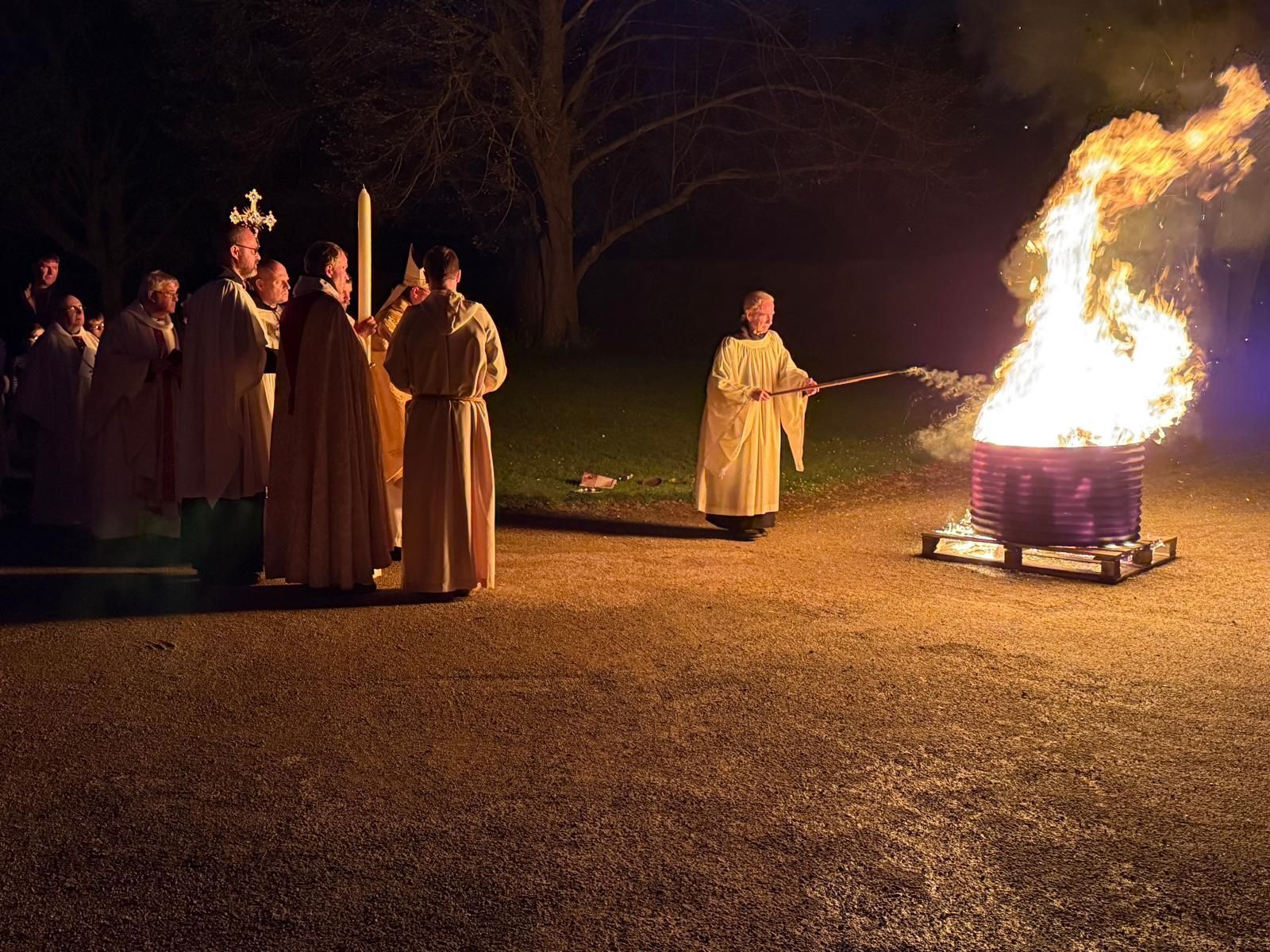
We began the night in darkness. Not as a symbol we invented, but as something recognise and experience. We know this darkness. We have lived it—in the world, and at times within our own hearts. And into that darkness, came not an explanation, not an argument, but a flame.
A single light, kindled and shared. And everything we have done since has followed that light. We followed the candle like a pillar of fire into the church, followed the swirl of incense like the cloud leading the Israelites through the desert. We saw how a small flame grows, how it is passed from one to another, until what was darkness becomes a place of quiet radiance. This is how God works—not by overwhelming, but by kindling; not by force, but by gift.
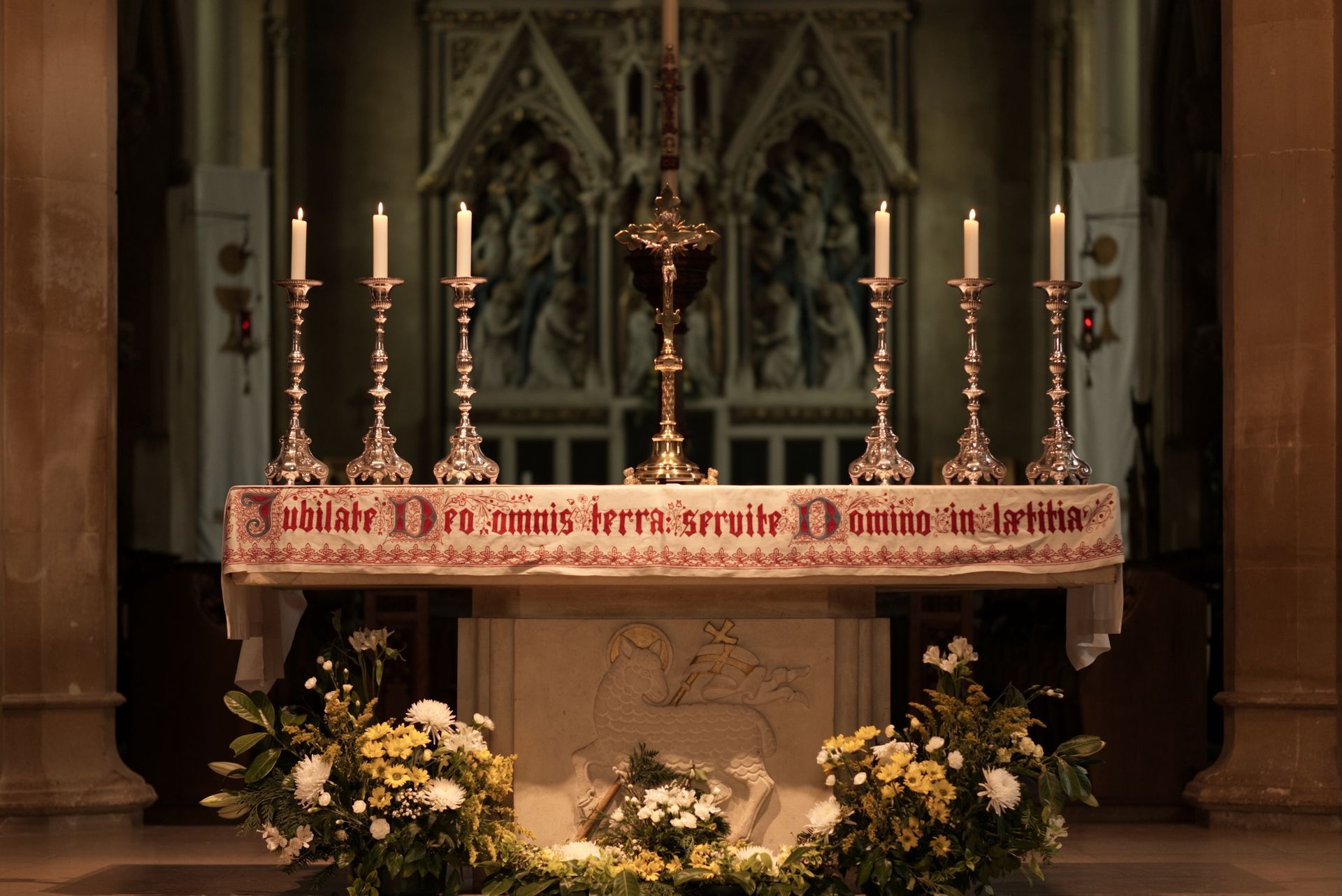
We sang of this night: “This is the night of which it is written: the night shall be as bright as day, dazzling is the night for me and full of gladness.” What a beautiful symbol is the candle. Marked with the wounds of Christ, it gives light as it consumes itself, as it sacrifices itself, prompting us to be light-givers too. Cross and resurrection are inseparable.
We even give thanks for the bees that fetched the wax, to build the candle, that burns the flame that announces an end to gloom and darkness. “Rejoice, O earth, in shining splendour, radiant in the brightness of your King! Christ has conquered! Glory fills you! Darkness vanishes for ever!” A flame spread in our hands through the entire Church. “Let this holy building shake for joy” we sang, just as the earth shook that first Easter and the guards of the tomb lay like dead men.
“Dazzling is the night for me” because bathed in the light of Christ we listened. We listened at length—longer than we are used to—because tonight the Church does not offer a summary. She gives us the story. From the first moment of creation, when God spoke light into being, through the long history of promise and rescue, through water and wilderness, exile and return—God has been at work.
And has led us to this night. Because the point is not simply that these things happened. The point is that this is our story. Not just something we recall, but something we enter. The God who spoke then is speaking now. The God who saved then is saving now. “This is the night.” Here, today at Belmont.
That is why the Church makes us wait and stretches out the night. Because what God does cannot be reduced to a moment. It unfolds. It takes time. It asks for patience. And then—only then—the bells rang.
The Gloria returned, not as something we decided to sing, but as a joy that breaks in, a joy we can no longer hold back.
For something has happened. And yet, when we come to the Gospel, we hear no description of the Resurrection itself. No one sees the moment. There is no account of how it happened. Jesus’ rising from the dead did not take place at dawn on Easter Sunday; dawn revealed that something that had happened in deepest night. The resurrection is a deed worked by God in darkness, with no human witnesses to the moment or the how of its happening.
But as dawn breaks, they see an empty tomb. A message. A command not to be afraid. “Why do you seek the living among the dead?”
Faith begins here—not in seeing everything clearly, but in hearing a word and trusting it. The Resurrection is not something we master or explain. It is something we receive, something we are drawn into.
And that is why in this night we turned to water. Because Easter is not only about Christ rising from the dead. It is about our being joined to him. The Church does not simply announce the Resurrection—she enacts it.
In baptism, we pass through water and emerges into new life. Not as a metaphor, not as a reminder, but as a reality. What happened to Christ becomes, by grace, what happens to us.
And even when there are no baptisms, the Church does not let us stand apart. We renew our promises. We renounce, we profess, we are sprinkled with water. We are brought back to the font, because this is where Easter takes hold in us. Like the deer that yearned for living water we have been longing for that refreshment.
We are not spectators tonight. We are participants. And in a few moments, we will come to the altar. The same mystery, now given as food. The risen Christ, not absent, not distant, but present— offering himself, drawing us into his light, his life, his love.
The fire, the candle, the Word, the water, the bread and the cup.
Christ is risen. And step by step, sign by sign, he draws us with him—from darkness into light, from death into life. And we sing our Alleluia’s into the night.