Easter Sunday Morning 2026
Eastering in Us: Homily by Abbot Brendan
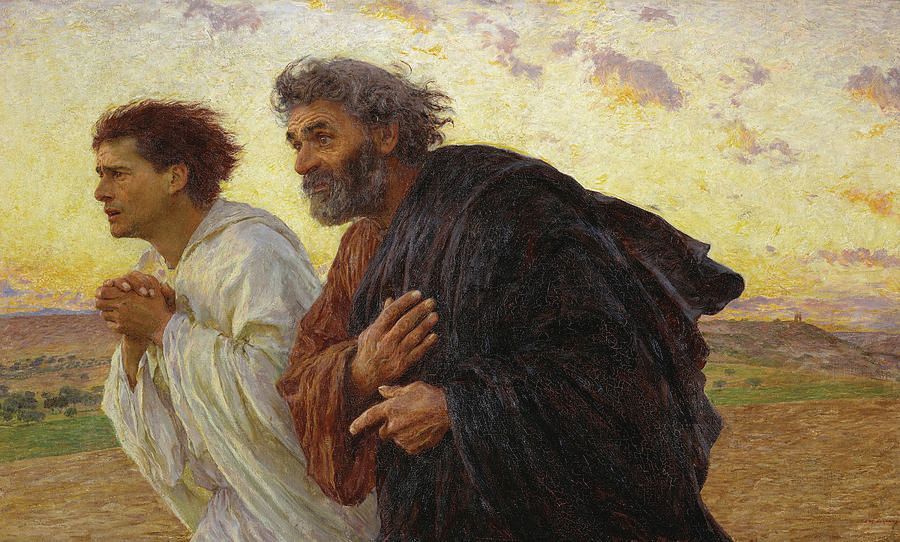

There is a beautiful urgency in the Gospel we have heard: Mary Magdalene running to Saint Peter and the Beloved Disciple, and both of them running fast towards the tomb. They ran with an urgency mixed with love and fear. The younger one runs faster. Love always runs faster. And yet he does not enter. He arrives first, he sees—but he waits.
And then Peter arrives, out of breath, I am sure. Peter, who had denied. Peter, who carries in his heart the unbearable memory of having loved and failed at the same time. He does not wait. He goes straight in. It is as if guilt itself gives him a kind of courage. And he sees.
Then the other disciple enters. He sees. And he believes. No voice. No vision. No risen Christ standing before him. Only absence. And yet—faith. Because love recognises what the eyes cannot yet grasp.
This is the mystery of Easter. There was no spectacle, only signs. As in life, not everything suddenly becomes clear; and yet the heart can perceive what the mind struggles to understand. Faith often begins not in certainty, but in a quiet recognition that something has changed forever.
We might think that this is the end of the story—but in truth it is only the beginning. The empty tomb is not a conclusion, but the opening of a whole new story. Christ has come back from the dead not simply to prove something, but to share something—to give us his risen life, to become our life, so that we may become signs of his Resurrection in the world.
And how are we to be his life, if not through our own human loves? He gives us that love with which he conquered death, so that we might renew one another in that same love. Ours is to be a life of love: love that creates, love that fills with joy; love that becomes food and clothing and water for thirst; love that is bread; love that is light and peace. Love that forgives and heals and sustains, that gathers us into one. Love that gives life to the world and beauty to human living.
But we cannot do this on our own. That is why we were sprinkled with water this morning: to remember that in our baptism we have already been given his risen life—the power of his grace, the energy of his love.
In baptism Christ’s Resurrection becomes ours. We are born to new life; we put on Christ; our minds and hearts are renewed. We sang last night: “This is the night when Christians everywhere, washed clean from sin and freed from all defilement, are restored to grace and grow together in holiness.” What was celebrated in the liturgy is meant to become real in us.
We are not to simply celebrate the Resurrection; but begin to live it. Through his risen life in us, his love wants to reach out to the ends of the earth.
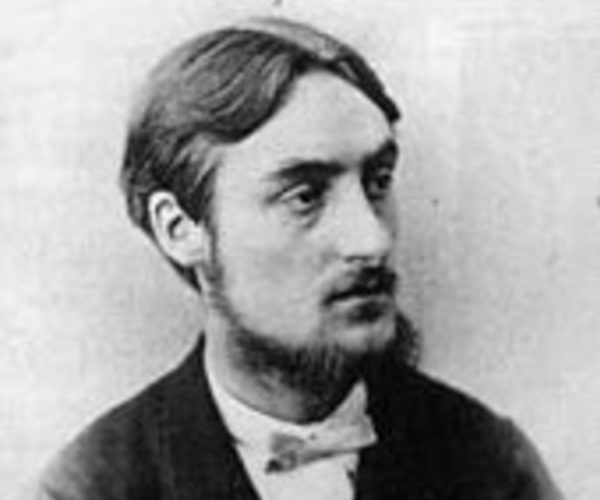

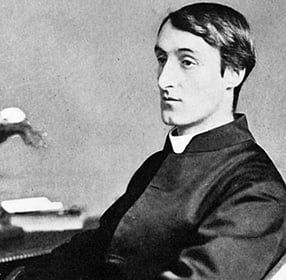
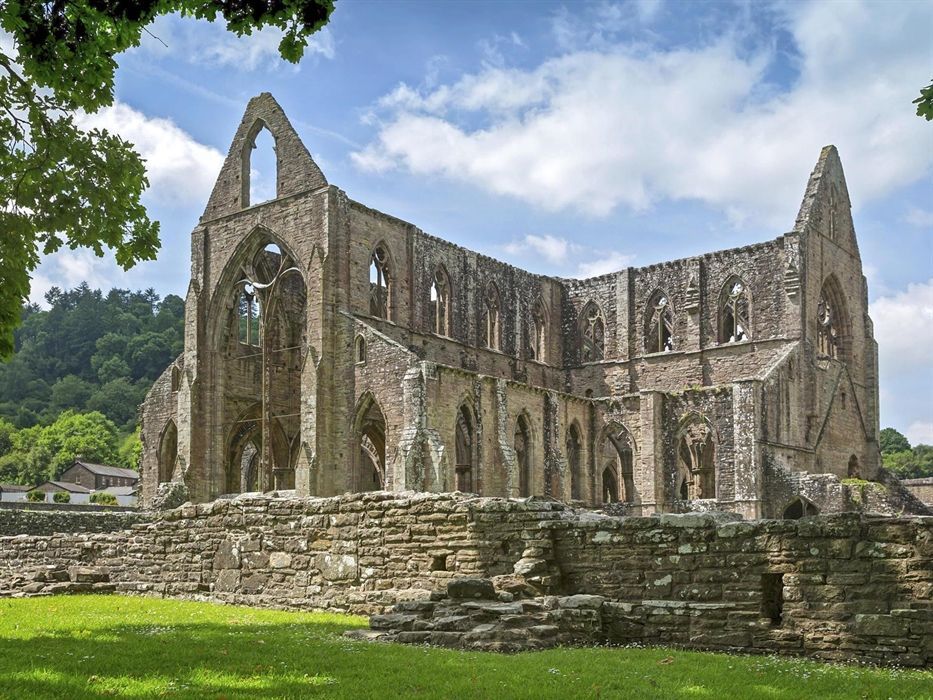
A young man from Oxford once came here to Belmont on retreat at Easter. He later became a Jesuit priest and one of England’s greatest poets—Gerard Manley Hopkins. He celebrated here, the wonder of the Easter faith that lay at the heart of his poetry. Sang Easter Alleluias. He was able to see the world charged with the grandeur of God, flaming, shining. Christ’s risen life suffusing all of creation.
After a terrible shipwreck off the coast of England, in which many died, including five Franciscan nuns, he wrote a poem in which he prays that God may “easter” in us—that God may be like a dawn breaking in our darkness.
I love that he uses “easter” as a verb. It helps us to see that Easter is not only something that happened long ago; it is something that happens now. It is the deep music and poetry of the Christian life. To “easter” is to be changed, to be renewed, to be filled with a life that is not our own.
As Saint Paul the Apostle says: “It is no longer I who live, but it is Christ who lives in me.” Easter becomes a living reality within us—Christ present, Christ acting, Christ loving in and through us. As Hopkins says elsewhere, “Christ plays in ten thousand places lovely in limbs, and lovely in eyes not his…”
So Easter becomes a verb: Christ alive in us, alive in our world—if only we allow him to shine through us. “Eastering” in us with forgiveness, with joy and delight, with generosity and grace, with his love and his life. The Risen Christ becomes the new centre, the living heart from which everything flows.
What does it mean for your life to think of Easter not simply as a noun, but as a verb? Where in my life does Christ want to “easter” today? Where does he want to bring light into darkness, life into what feels dead, hope into what feels lost?
Because this is the truth of this morning:
Our song is Alleluia! Christ is risen.
And he is not finished.
He is risen—and he is even now “eastering” in us.