Br Alban becomes a Claustral Oblate
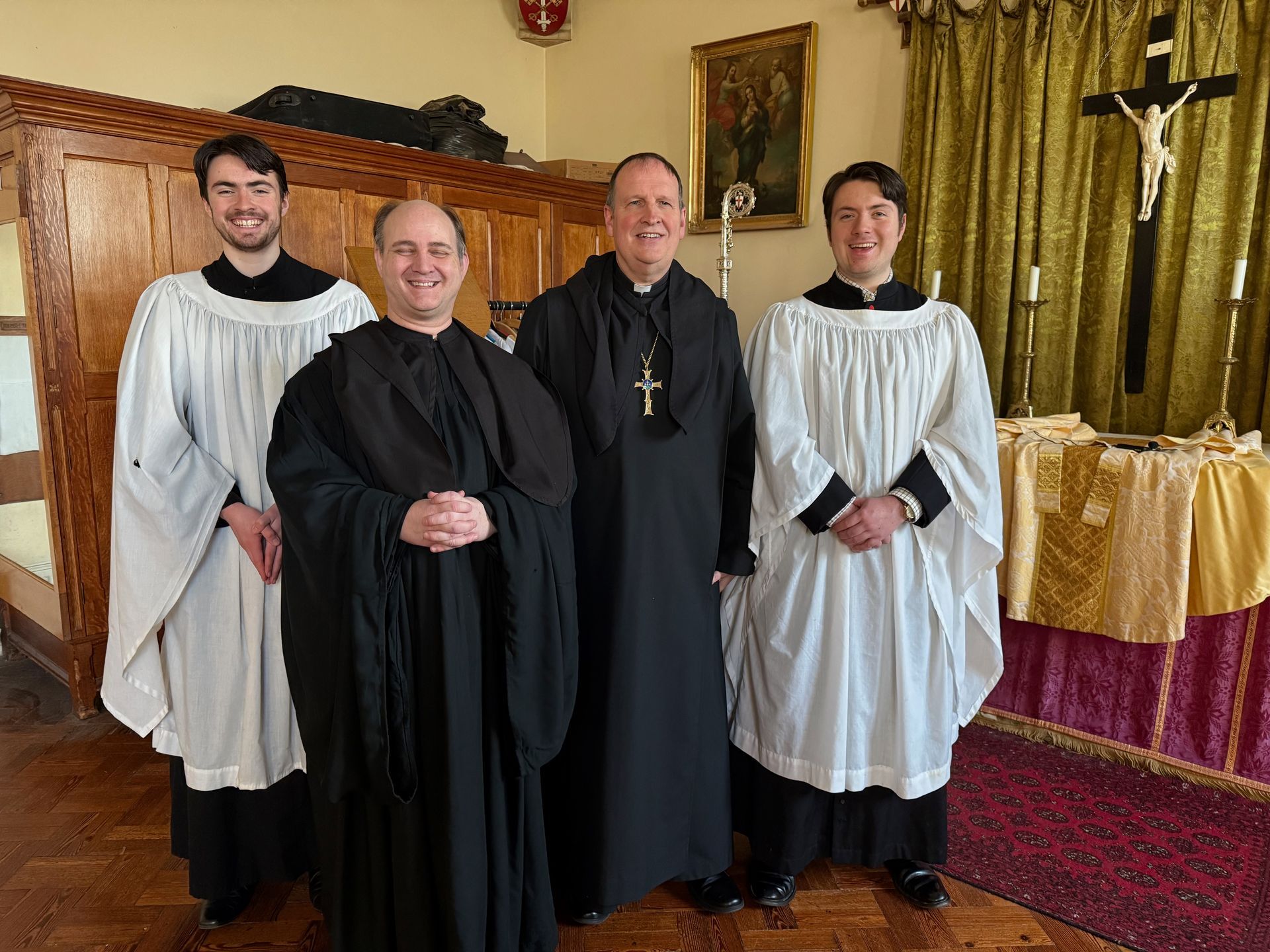
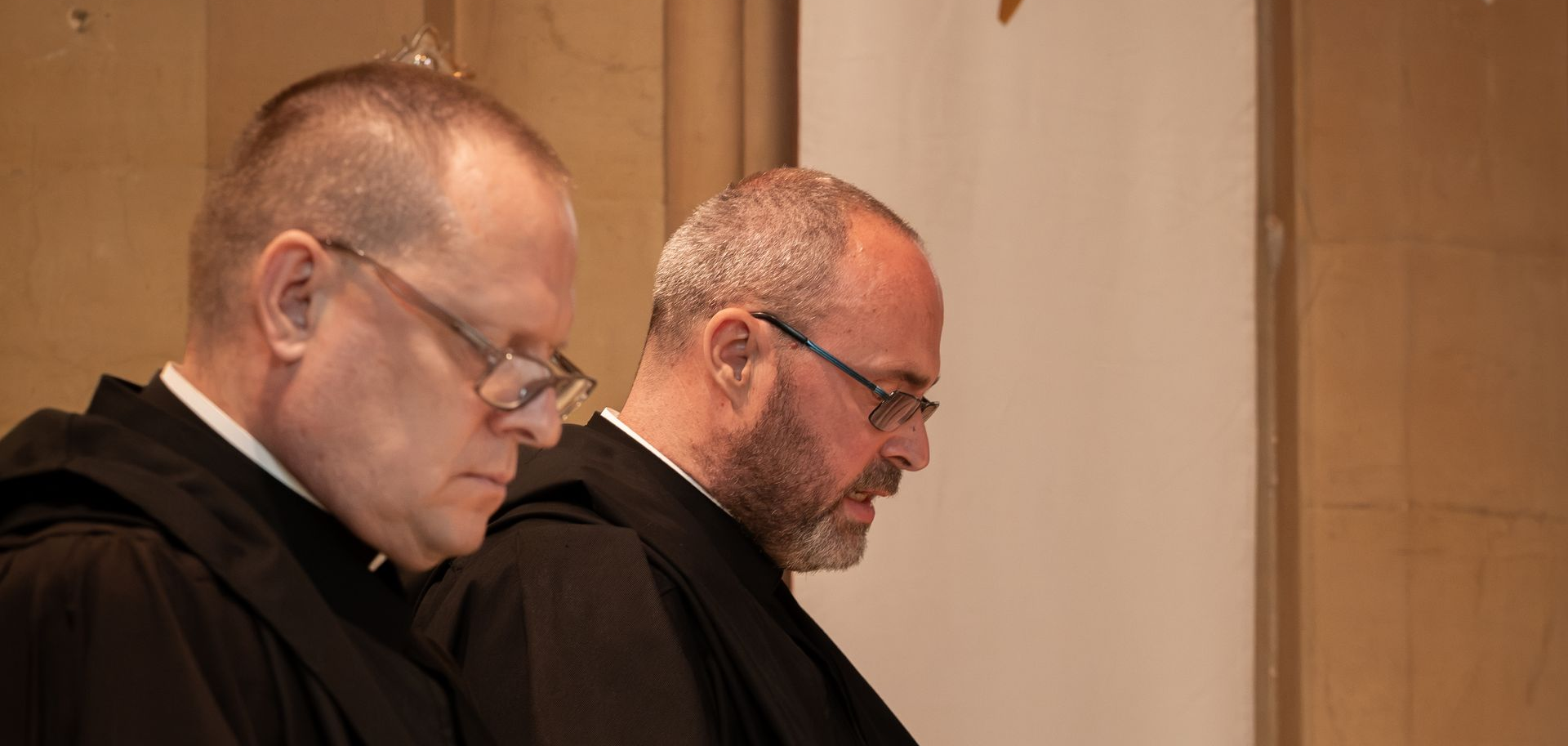
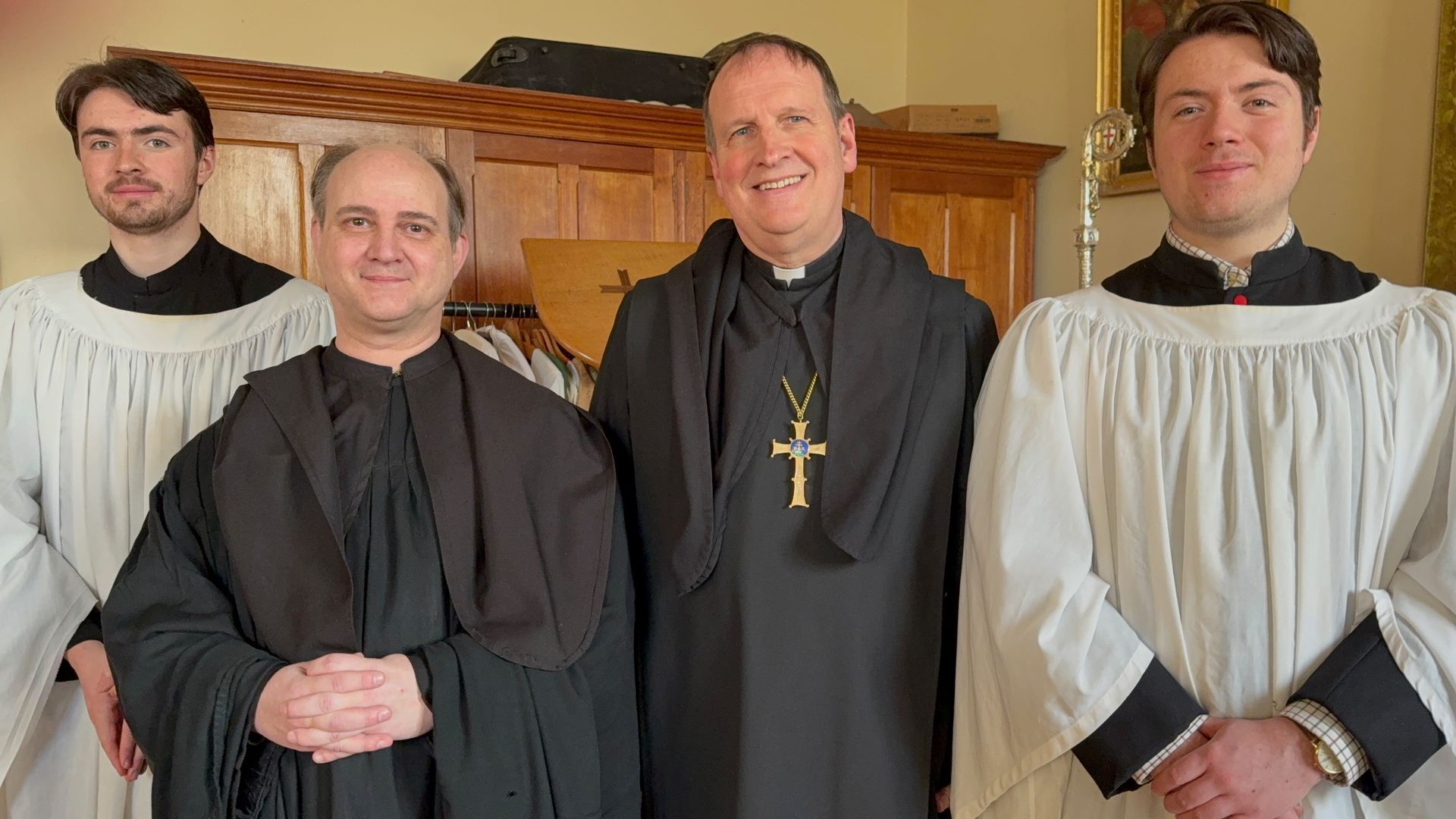
At a solemn Mass, the feast of St Basil and St Gregory, Br Alban makes his promises as a claustral oblate.
Some years ago, when the Church received the new translation of the Roman Missal, a small but significant word returned to our hearing: oblation. It is a word we know well in monastic life. Oblation is not simply an offering, not merely a gift placed on the altar. It is a life laid down, a self entrusted, a quiet surrender made before God. There is something total about it.
In the Mass, oblation belongs to sacrifice. What is placed on the altar is drawn into the self-offering of Christ, given once for all upon the Cross and made present among us. The Church teaches us that we do not stand at a distance from this mystery. We are not mere observers. We are participants, learning—slowly, day by day—to offer ourselves with Christ.
So today, Brother Alban, that word oblation takes flesh. You are not offering something external to yourself. You are offering yourself: your will, your time, your stability, your obedience, your desire to seek God within this community. We might recall the words of St Ignatius of Loyola in his Suscipe: “Take, Lord, and receive all my liberty, my memory, my understanding, and my entire will, all I have and call my own.”
Mother Teresa once said that in her prayer she would place her own heart upon the paten. Today your life is placed there too and joined to the offering of Christ. When St Thérèse of Lisieux made an act of oblation, she called it “one single act of perfect love”, and she spoke of experiencing the waves of God’s infinite tenderness flooding her soul. May that peace, and joy, and love be yours today, and in your monastic life.
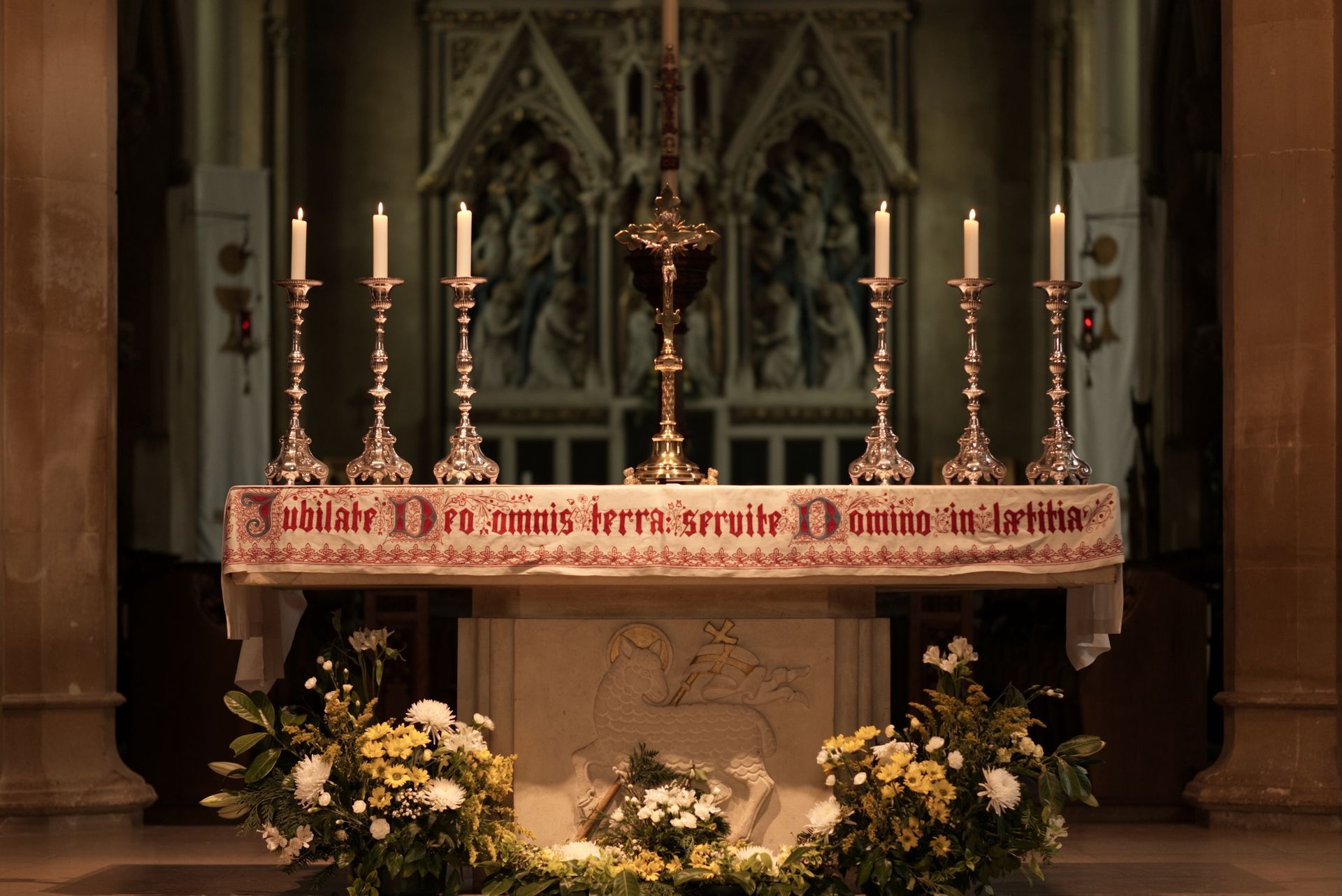
The monastic tradition has always known that the altar is the place where heaven leans close to earth. In a few moments, the promise of obedience that you make will be signed and placed, by your own hand, upon the altar. Your gift of self is brought into union with Christ’s own self-offering—made one with him, and made one with your brothers in this community. As St Benedict says, echoing St Paul: “We are all one in Christ.”
Those words were taken to heart by the saints we commemorate today:
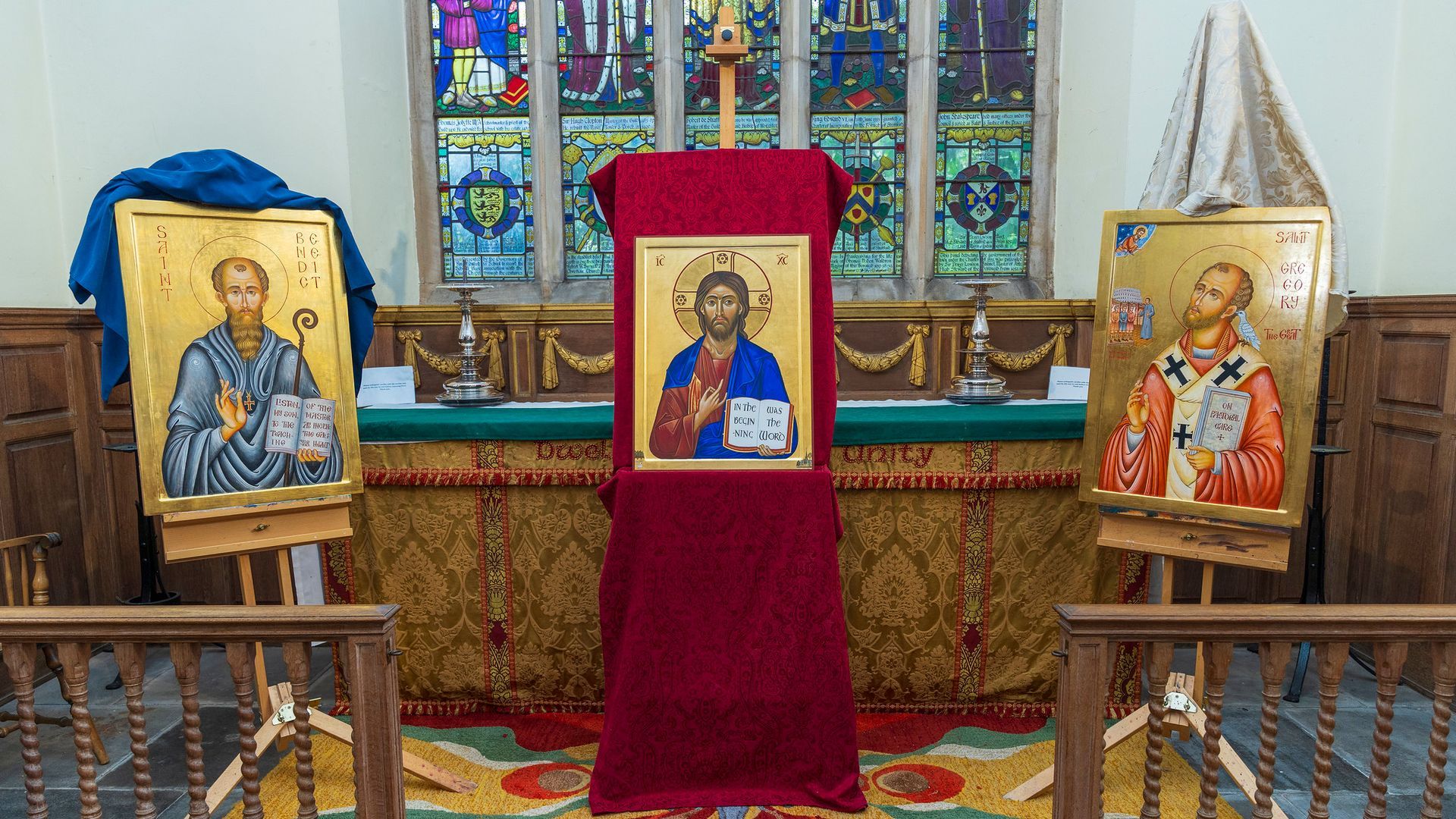
St Basil the Great and St Gregory Nazianzen. They were towering minds of the early Church—bishops, theologians, teachers whose words still shape how we speak of God. Yet what finally mattered was not the brilliance of their minds, but the shape of their hearts.
They met as young students in Athens. Gregory later wrote of their friendship in words that still move us: “We seemed to have one soul inhabiting two bodies.” Their friendship was not built on ambition, but on a shared desire: to seek God with an undivided heart.
That is already a lesson for today, and especially for you, Brother Alban. Monastic life is not a solitary hero’s journey. It is a shared search for God, sustained by friendship, patience, forgiveness, and endurance. Stability is never simply about remaining in one place; it is about remaining faithful to one another in the long obedience of love. You have chosen the path of oblation rather than profession, yet your desire is clear: to be one in mind and heart with your brothers here, seeking God in this place.
St Basil, more than any of the Eastern Fathers, helps us understand the spiritual meaning of life lived together. He once asked hermits a sharp question: “Whose feet do you wash?” How are you involved in the life of others? For Basil, monastic life could never be lived in isolation. He insisted that monks should not live for themselves, nor chase spiritual brilliance for its own sake, but live in community, under obedience, attentive to the Word of God and to the needs of others. He wrote: “The monk must be the last of all, and the servant of all.” Words that echo today’s Gospel.
St Gregory Nazianzen, for his part, reminds us of another essential monastic truth: God is always greater than our words. He was called “the Theologian” not because he spoke confidently about God, but because he spoke reverently, cautiously, with awe. He knew when to speak—and when to be silent.
That belongs deeply to the cloister. The monk learns that silence is not emptiness, but space: space for God to teach, space for the Word to descend from the head into the heart. Before we speak of God to others, we must ourselves be purified of heart; we must become light in order to give light; we must draw near to God ourselves before we can lead others to him.
And so, Brother Alban, St Paul gives us the final horizon for this day: maturity in Christ. The goal of all ministry, all discipline, all obedience, is this: “to the measure of the stature of the fullness of Christ.” Not that you should become more impressive or more accomplished, but that Christ should slowly take shape in you.
Today you are not reaching that fullness. This is not the end of your formation, but its real beginning. By your oblation, you consent to be formed—over time, through prayer, silence, fraternity, and obedience—until your life begins to carry the weight and the shape of Christ’s own. Christ himself is our only measure. In his will we find our peace. It is a daily thing: yes to God, yes to one another, slowly, by his grace, we are changed.
You will find yourself falling short of the ideals to which we are called. We all do—every day. But that is why we live together: to support one another, to carry one another, to wash one another’s feet, so that day by day God’s grace may transform us into something we could never imagine. As St Paul says in that same letter to the Ephesians: “Glory be to him whose power, working in us, can do infinitely more than we can ask or imagine.”
St Basil the Great speaks of the logos spermatikos, the seed of the Word planted within the human heart: a divine beginning, an inner inclination toward the good and toward love. [Basil, Longer Rule 2]. If such a seed is planted within us, then the question becomes not only what am I to become? but what are we to become together? Today, Brother Alban, you commit yourself to nurturing that seed of divine life within you, here, in this community.
“In the Lord’s own house shall I dwell for length of days unending.”
May this community help you to grow into that fullness.
May patience complete what generosity has begun.
And may the Christ to whom you offer yourself today be the measure of your life,
until he brings us all together into everlasting life,
into his own fullness. Amen.