Solemn Profession of Br Meinrad & Br Gildas
A double celebration on the feast of St Michael and All Angels
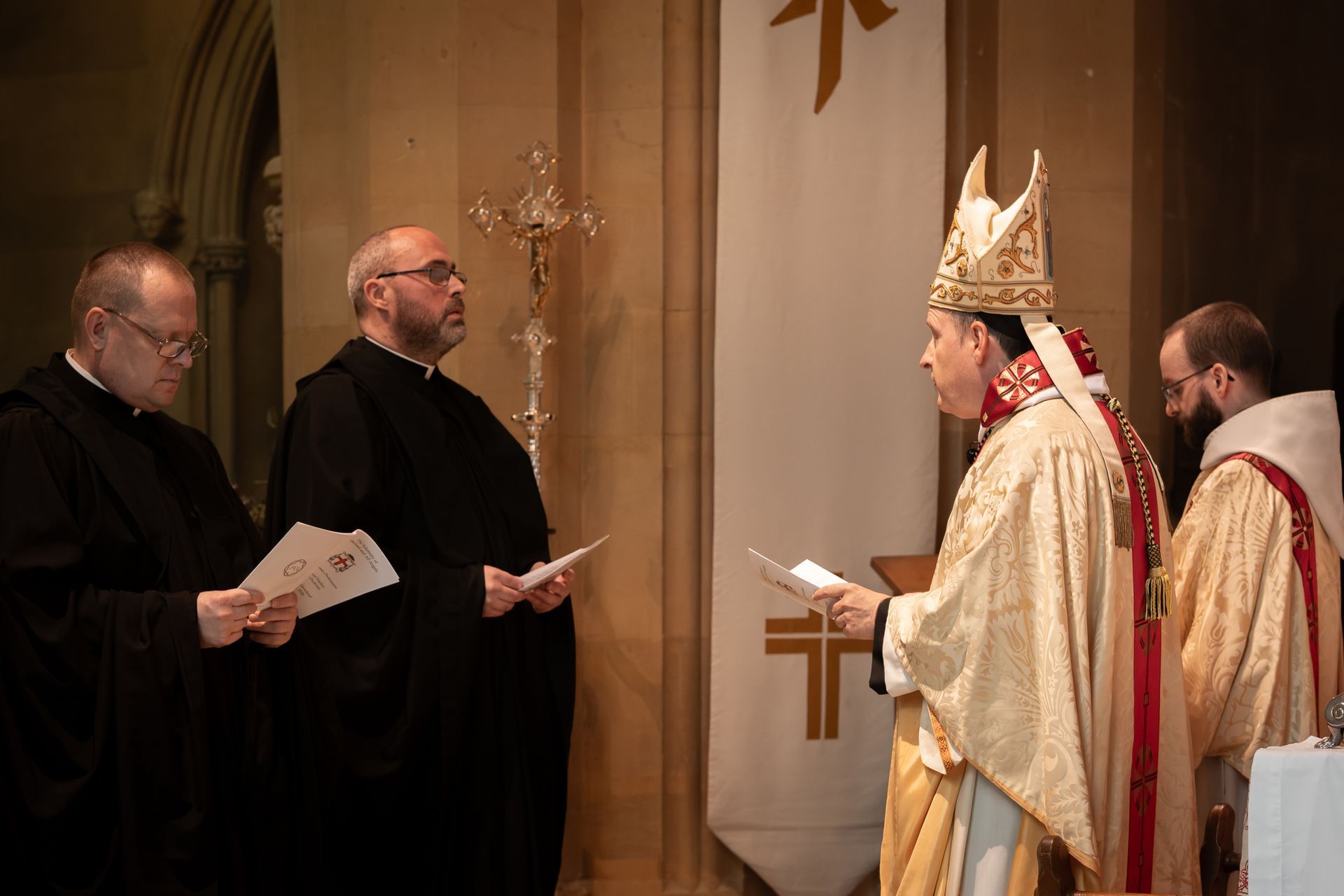

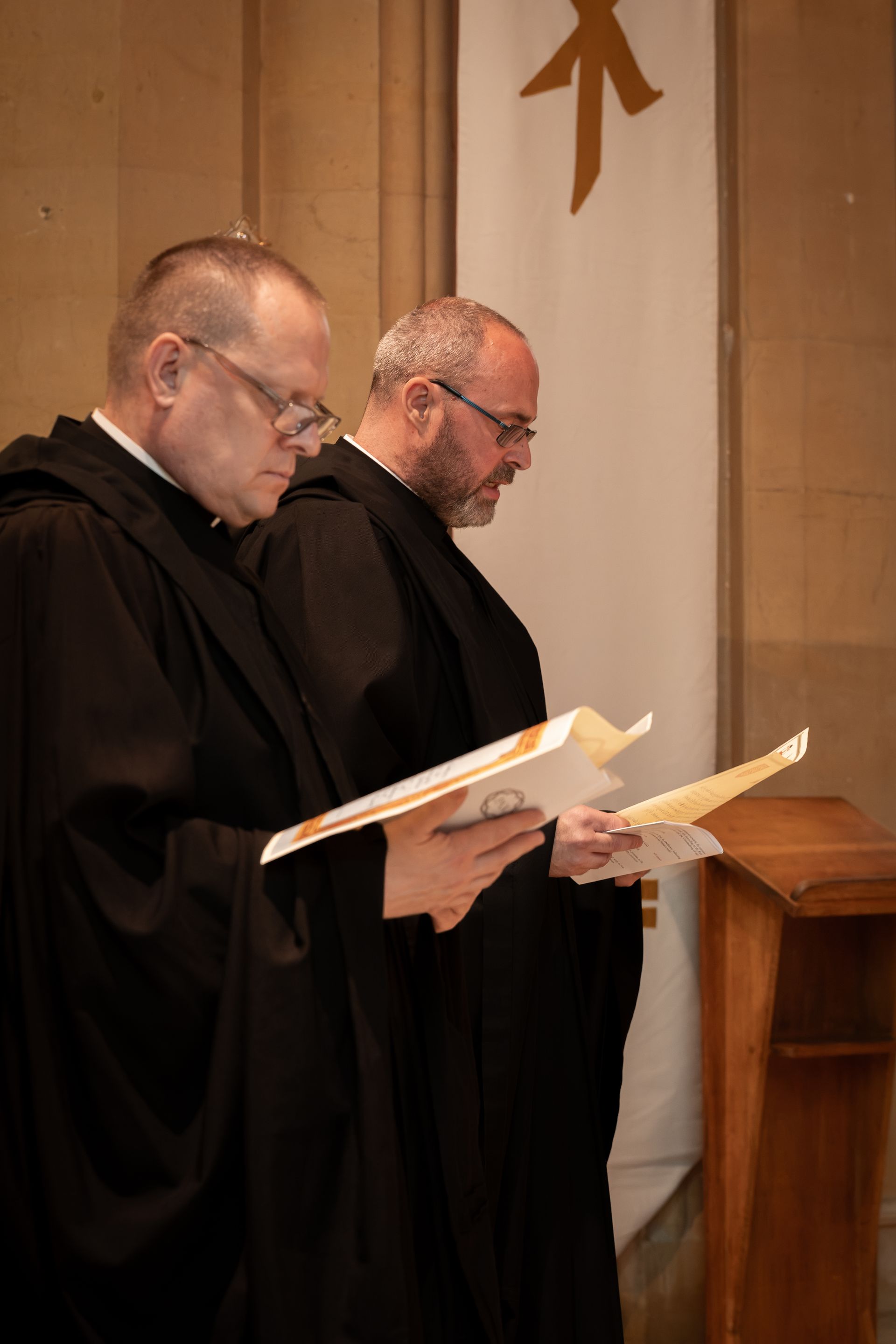
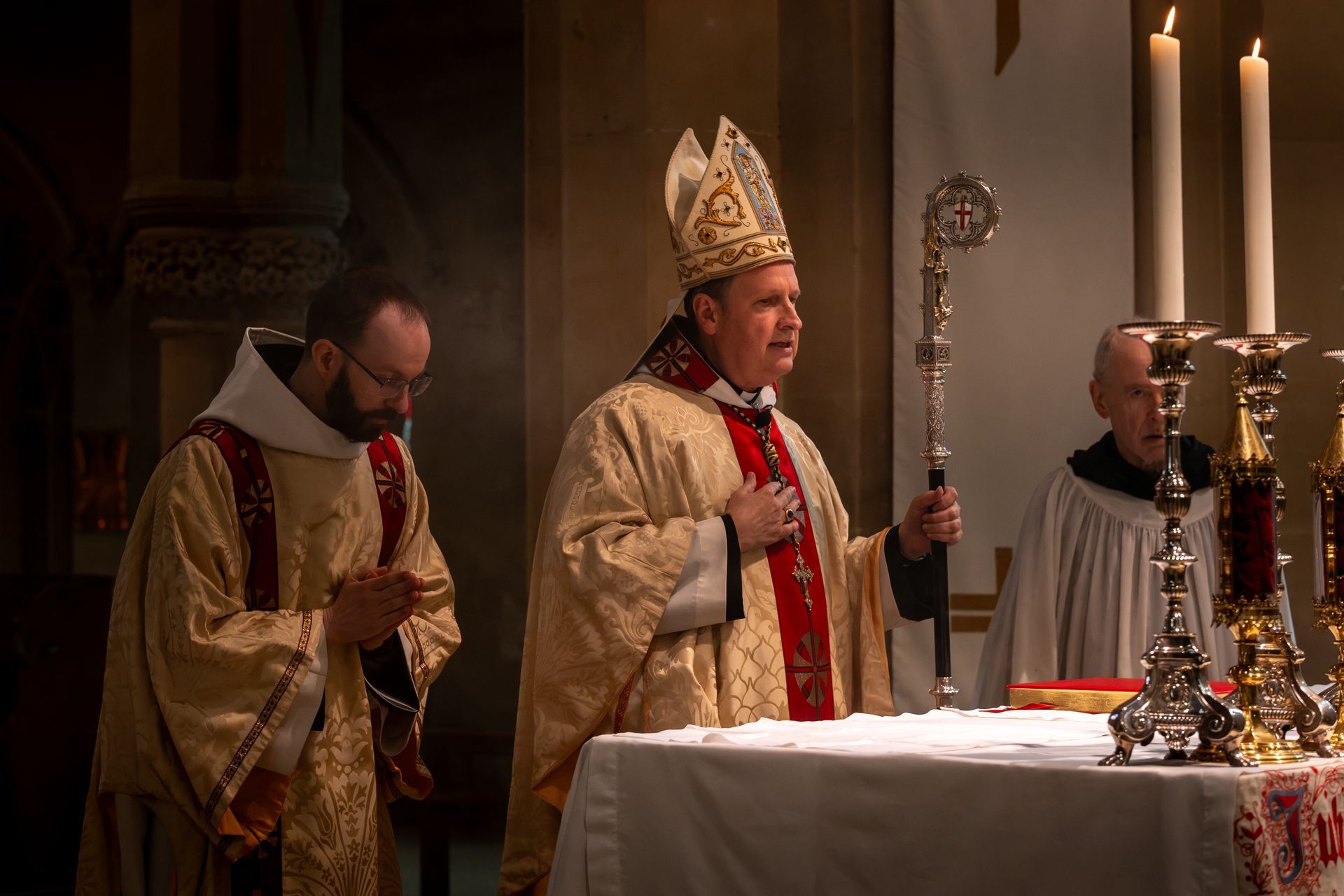
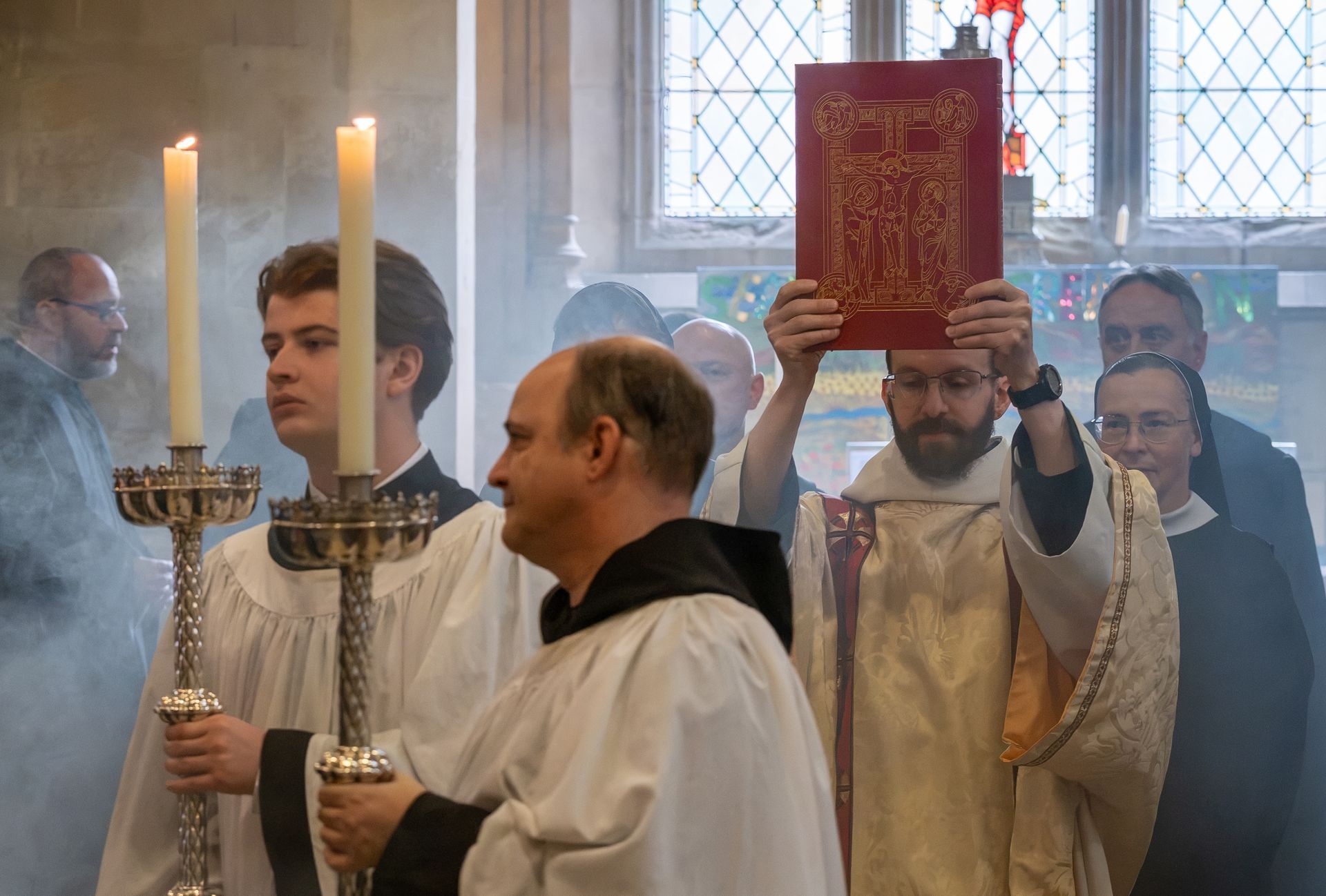
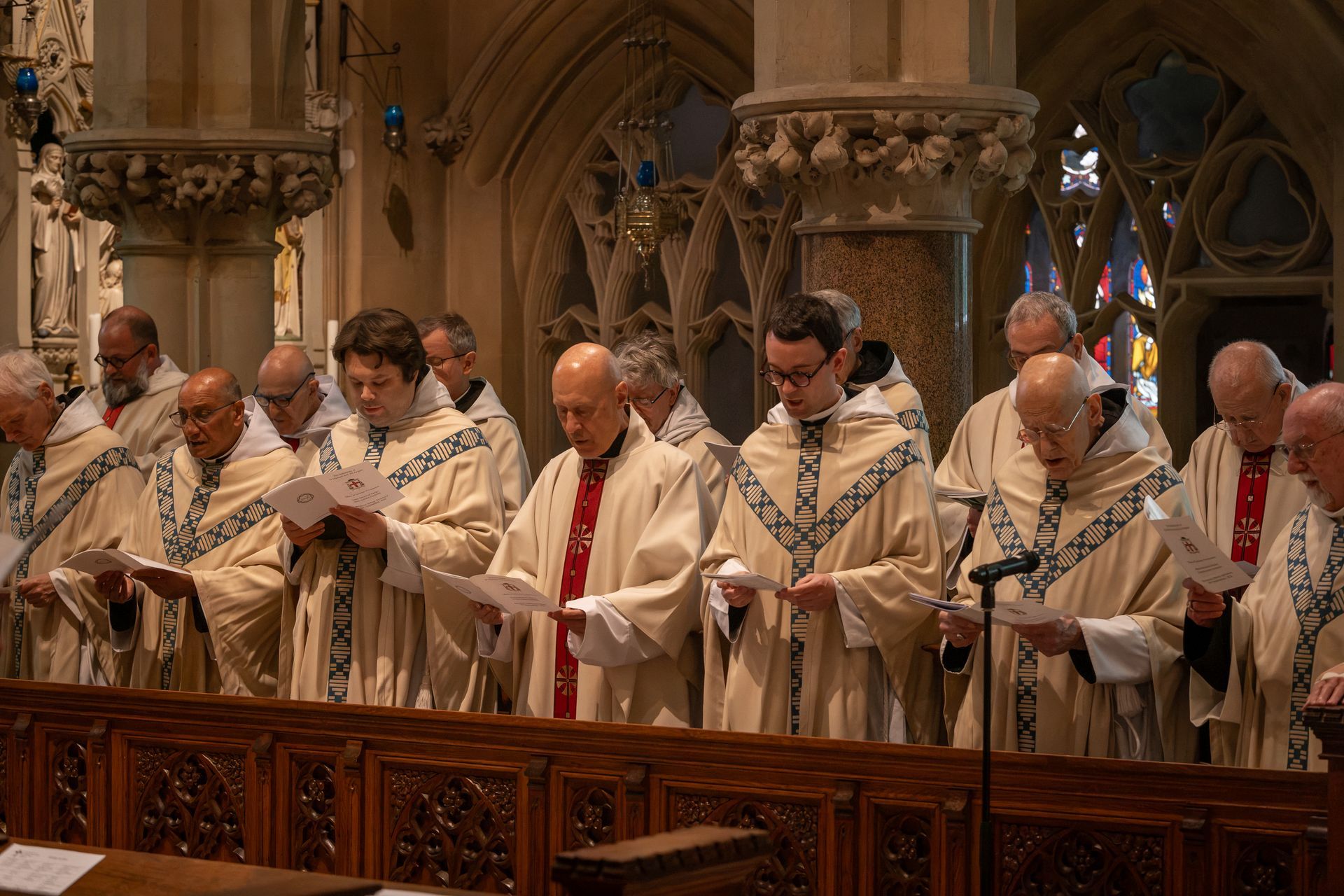
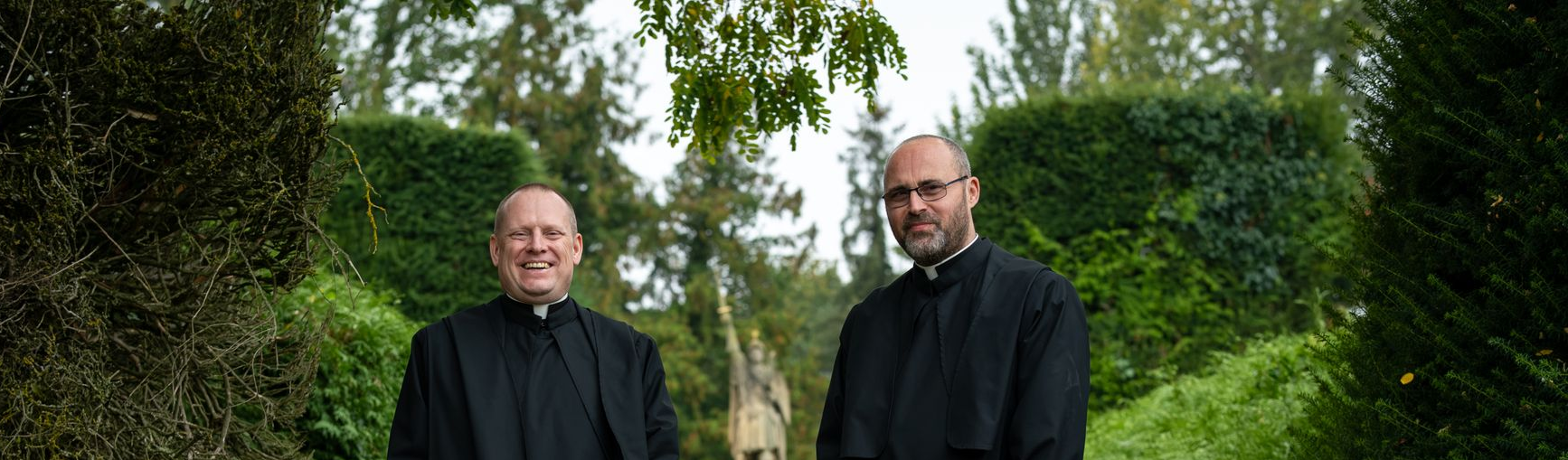
Today, on the Feast of St Michael and All Angels, Dom Meinrad and Dom Gildas made their Solemn Profession as monks of Belmont Abbey. Friends and family travelled from near and far to share this joyful occasion, joining a packed Abbey church in praying with them and for them as they made their vows of stability, obedience and conversion of life.
Brother Meinrad and Brother Gildas are currently studying theology in Rome, where they are living at Sant’ Anselmo, the Benedictine university and international college. After these special days at Belmont, they will return to Rome shortly to continue their studies, carrying with them the prayers and good wishes of the whole Belmont community.
Below is Abbot Brendan's homily.
My dear Meinrad and Gildas,
A long journey has brought you both here today. Not just Liverpool and Lithuania, but the whole life experience that you have brought with you. And you gather amongst family and friends, amongst those who have loved you and supported you along the way. Meinrad, I know you will be thinking of your dear mother, Frances, watching down from another place. Gildas, you will be saddened that your parents cannot be here, and that your brother Gintas cannot leave his hospital bed. Gildas, you have Ingrida and Emelia, and with them it is good to welcome others from Lithuania. Closer to home, Meinrad, you have your dad John, who I know has supported you through and through, and the rest of your family. You are all part of our extended Belmont family now.
In a few moments you will come before this altar and make your solemn profession. You will promise stability: to make this place your home and family. Obedience: learning to let go of your own will and make room for God and others. And conversatio morum: allowing yourself to be shaped and converted by this monastic life, day after day. Not to become something strangely “religious”, but, by the grace of God, to become the human beings God created you and has called you to be.
And you will know that you cannot possibly do this by your own strength. That is why perhaps the most moving moment of the profession is when you stretch out your arms and sing: Suscipe me…“Uphold me, Lord, according to your promise, and I shall live.” Not: “Look what I am promising to do for you, Lord.” But: “Uphold me.” Hold me up. Because I cannot do this without you. And we are Benedictines: we can’t do it without our brothers.
And then, after all the solemnity of the Profession, comes a favourite piece of Benedictine ceremonial. A safety pin. Your hoods will be pinned up, and for the inside of three days you will disappear into solitude and silence. Traditionally we call it “going into the tomb.” The procession doesn’t end with a party – it ends with a retreat.
It sounds rather dramatic “going into the tomb.” But it takes us to the heart of what you are doing today. Monastic life a full living out of your baptism. Saint Paul says that in baptism we went down into the tomb with Christ so that we might rise with him into a new life. You go into the tomb, not to disappear from life, but to receive that life and live that life more fully. You die in order to live. You let go in order to receive. You put off the old Adam to be alive in, to live from the power of his risen life.
The Angelic Life?
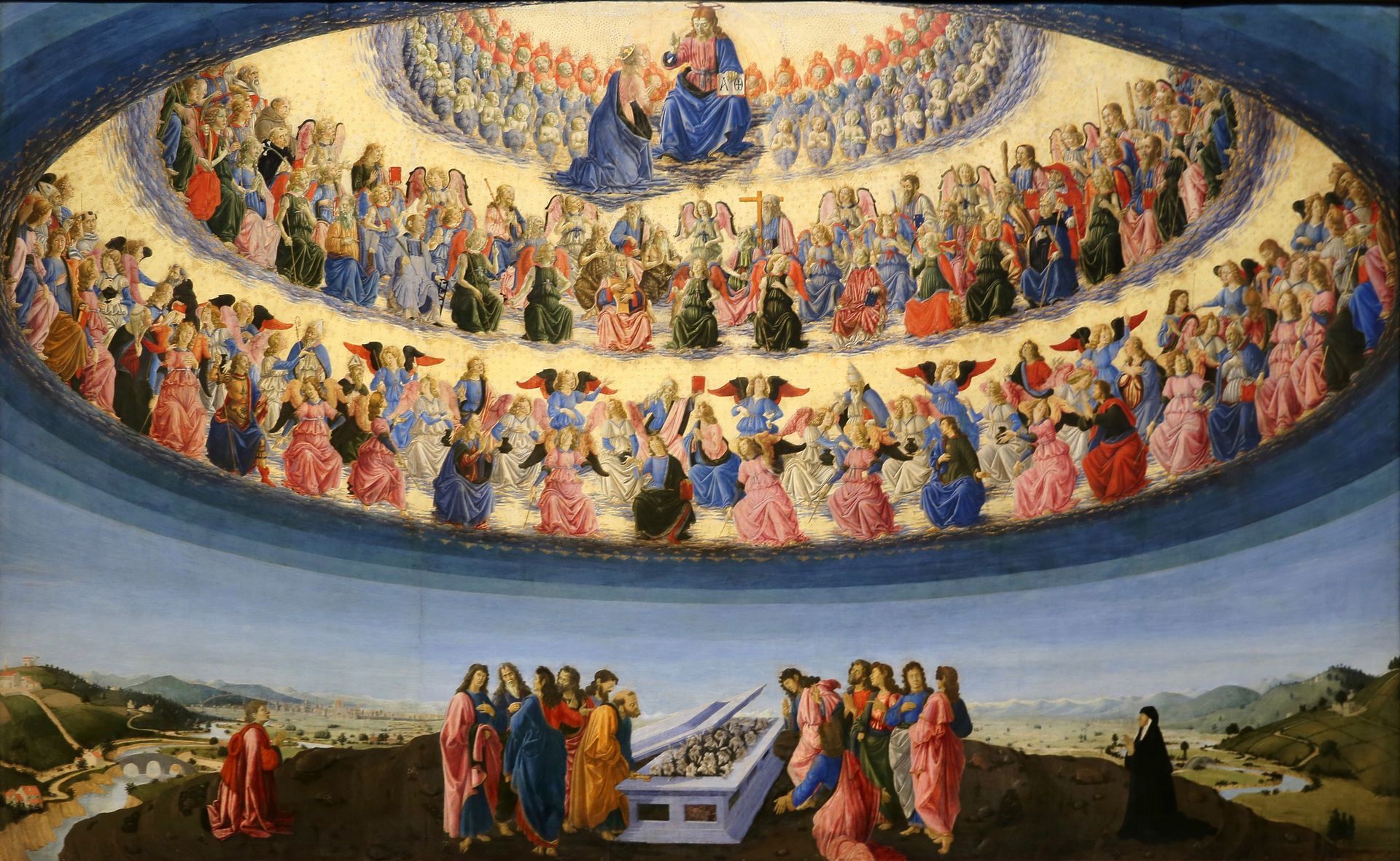
And that brings us beautifully to this particular day, the feast of Saint Michael and All Angels, our patronal feast. Jesus says in the Gospels that the children of the Resurrection will be “like the angels” (e.g. Luke 20:34–36). And from very early times Christians took those words seriously. They sometimes described the monastic vocation as the angelic life. Which is quite a thought.
Meinrad and Gildas, you have lived with us long enough to know that monasteries are not generally populated by angels. Indeed, after a few years in community, most monks acquire fairly conclusive evidence to the contrary.
We are creatures of flesh and blood. We get tired. We have moods. We get irritated. We misunderstand one another. We occasionally think our own idea is obviously the most sensible one and wonder why no-one else has realised it. And yet the Church has dared to speak of this as the angelic life. Why?
Perhaps because of two things that angels do. They praise and they serve.
Praise
First, praise. The biblical angels stand before God. Their whole existence is praise. Saint Benedict says of the Divine Office: “In the presence of the angels I will sing to you.” And there are angels everywhere in this church to remind us: carved in stone, glowing in stained glass, watching over us in choir. Day after day, year after year, monks have stood beneath them and sung the praises of God — when we feel like it and when we don’t, when our hearts are full and when they are empty. The praise goes on. And slowly the choir stall teaches us where to look: beyond ourselves, towards God.
Service
But angels also serve. Gabriel goes to Mary. Raphael accompanies Tobias and brings healing. Michael fights against evil. They stand before God precisely so that they are ready to be sent by God. And that is the other half of the angelic life. The monk looks upwards in praise, but he also looks outwards in love. Prayer and work. Choir and kitchen. Altar and guesthouse. The brother beside me and the stranger at the door. The more truly we stand in God’s presence, the more ready we should be to serve wherever we are needed.
A Story from the Desert Fathers
The Desert Fathers understood this very well. There is a lovely story of a monk who announced to his elder brother that he wanted to live like the angels. He was going to give up work altogether and devote himself entirely to prayer. So off he went into the desert. A week later, rather hungry, he came back and knocked at the door. “Who is it?” his brother called. “It is John, your brother.” “No,” came the reply. “John has become an angel. He no longer lives among men.” And his brother left him outside until morning. Eventually he opened the door and said, “You are a man. You must work in order to eat.” John prostrated himself and said, “Forgive me.”
There is something wonderfully Benedictine about that story. You want to become an angel? Good. Start by washing the dishes. We do not find God by escaping our humanity, but by allowing grace to transform it.
Some days...
There will be days, Meinrad and Gildas, when the monastic life feels wonderfully angelic. The chant will soar. The light will come through these windows. Prayer will be easy. The brethren will all appear remarkably holy. Treasure those days.
There will be other days when none of those things will happen. And those days may be even more important. Because then the angelic life will mean getting out of bed when the bell rings. Turning up for Vigils. Doing the job you have been given. Listening patiently to a brother you have heard tell the same story before. Saying sorry. Forgiving. Remaining faithful when prayer seems empty. And beginning all over again.
That too is the angelic life. Indeed, perhaps that is where it becomes most real.
And Christianity is not about escaping our humanity, because God himself entered it. It was not the angels that Christ took to himself, it was descent from Abraham. (Hebrews 2:16) The Son of God did not save us by hovering a few inches above the ground. He became flesh. He served. He suffered. He died. And he rose.
So when you go into the tomb after this profession, you go there with Christ. And you will come out again to live the Christ life, the risen life, the angelic life. Here, at Belmont. Among these brothers. This miserable lot! Among these particular, imperfect, loveable — and occasionally rather less loveable — human beings, as indeed you will sometimes have seemed to each other. This is the community God has given you, and to whom today you give yourselves: to be true brothers in the human reality of daily life.
Perhaps that is what a monastery is meant to be. Not heaven on earth because everybody inside it is perfect — certainly not that — but a little anticipation of heaven because, in the middle of all our ordinary humanity, we try to make God the centre. We praise and we serve. We look towards God and learn to look out in love towards one another.
-o-
Dear Meinrad and Gildas, that is the life you choose today. You will not live it perfectly. None of us does. But you do not promise perfection today. You promise fidelity. You promise to stay. You promise to listen. You promise to be converted. You promise to allow Christ, slowly and patiently, to make you new.
You will rise. You will make your profession. You will sing your Suscipe. After that, you will have nothing left to do. The Church will sing over you. The saints will be called upon. The angels summond. And you will simply lie there before God. Perhaps that is the deepest image of your profession. Not what you can achieve for God, but what you are willing to let God do in you.
And later you will go into the tomb. But you will go there in order to rise. To rise to a life of praise and service. To rise more fully into Christ. To rise, day after day, into that life for which God made you.
And whenever you discover that you cannot do it by your own strength — which will probably be quite often — you will have the prayer you sing today:
Suscipe me, Domine, secundum eloquium tuum, et vivam.
Uphold me, Lord, according to your promise, and I shall live.